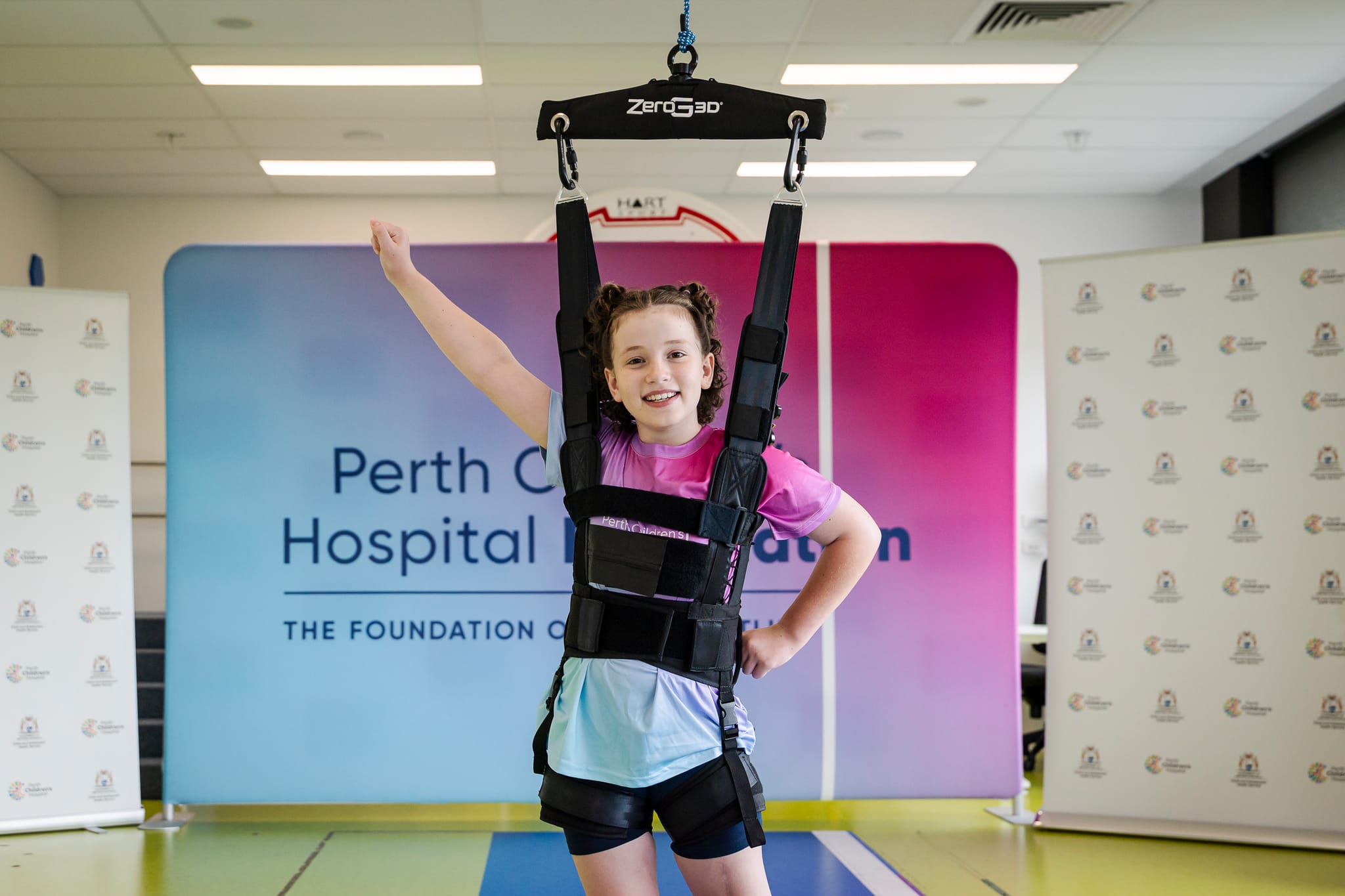
Defying gravity: Game-changing rehab robot transforms recovery for WA kids at PCH.
- Perth Children's Hospital Foundation
Defying gravity: Game-changing rehab robot transforms recovery for WA kids at PCH.
- Perth Children's Hospital Foundation
WA kids recovering from serious illness and injury are regaining their strength and mobility again, thanks to a new robotic rehabilitation system now on offer at Perth Children's Hospital (PCH).
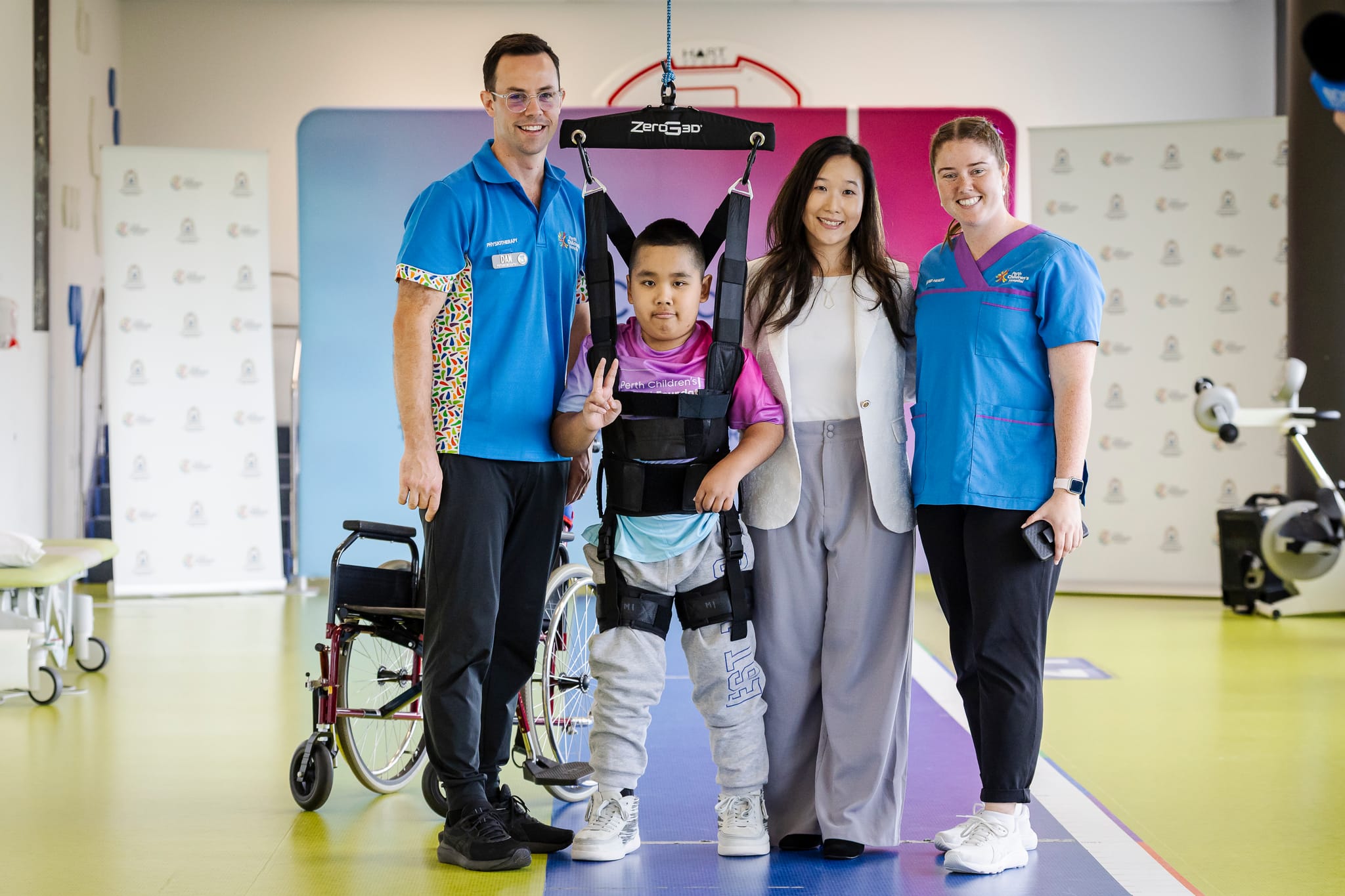
Harper (10), Bruce (9), Luca (4), and twins Rosa and Eve (4), were among the first to try out the ZeroG 3D this month, with each navigating complex health challenges from cerebral palsy to a rare genetic condition and post-cancer recovery.
Funded through a $1.2 million investment by Perth Children’s Hospital Foundation (PCHF), the ZeroG 3D is the first of its kind in an Australian children’s hospital and forms part of the hospital’s expanding robotics program within Kids Rehab WA.
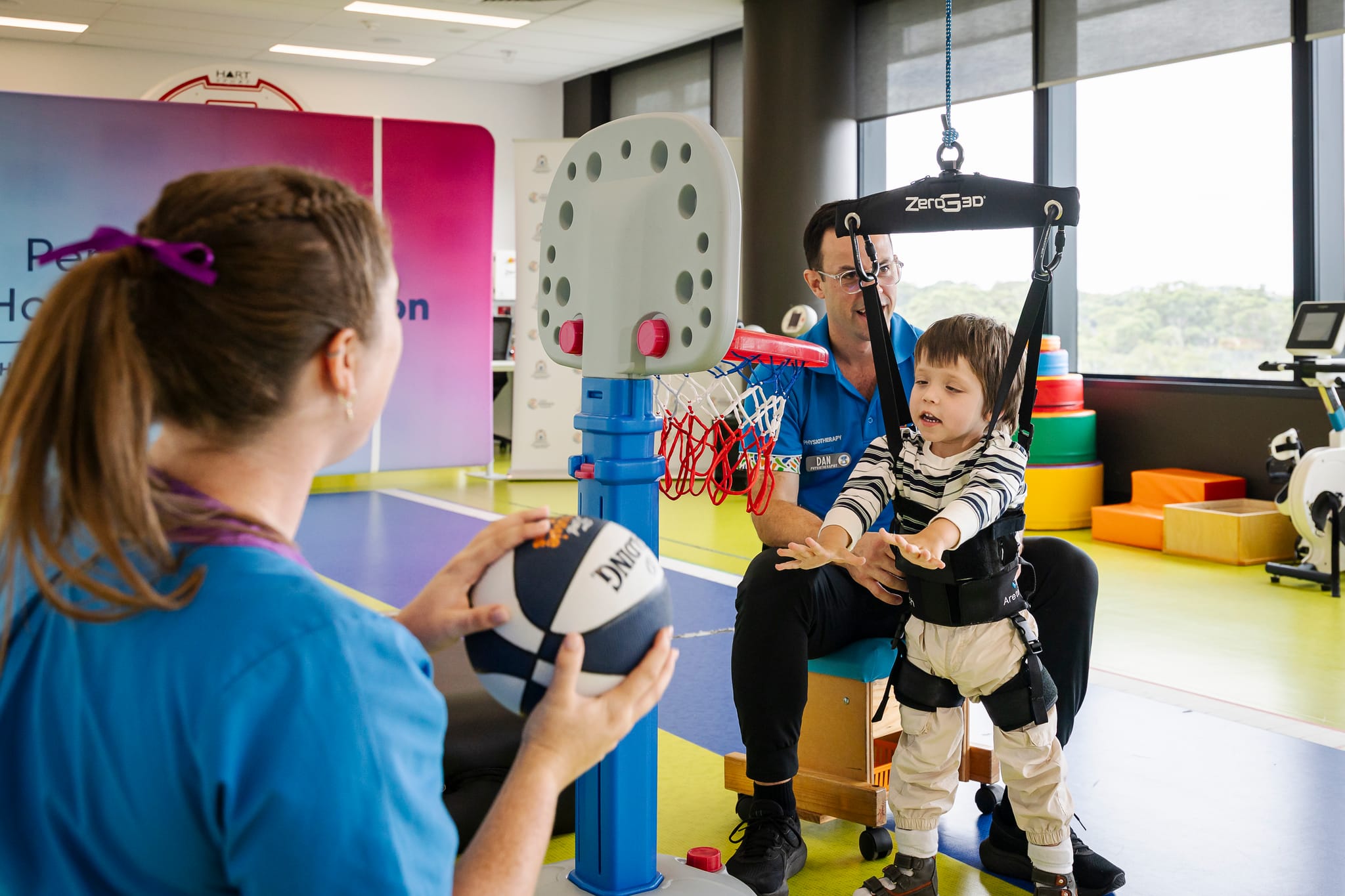
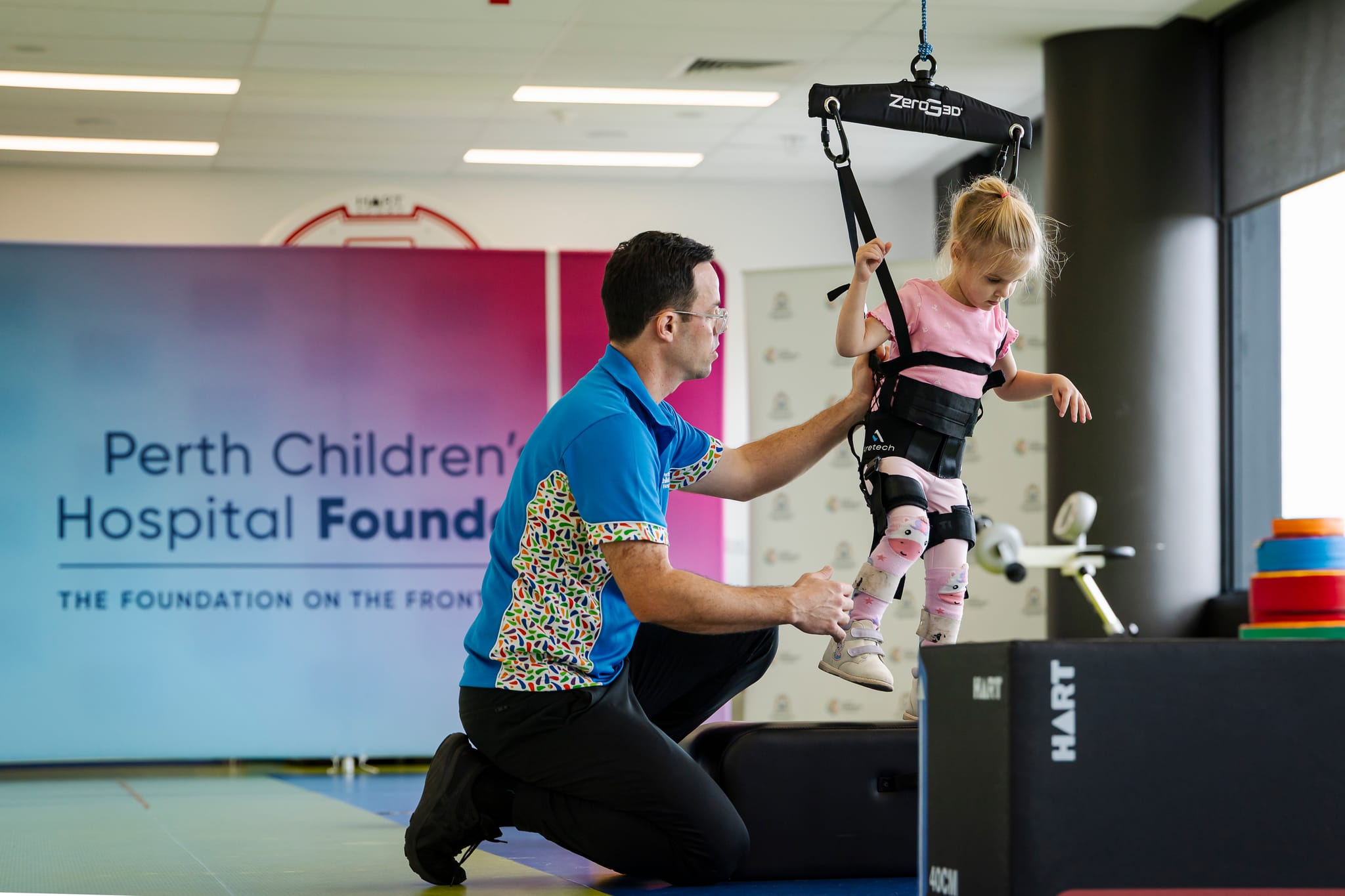
The ZeroG 3D is a dynamic body-weight support system that allows children to walk, balance and practise everyday movements while suspended in a harness attached to a ceiling-mounted robotic track.
The ZeroG’s introduction at PCH means WA kids can now access the technology as part of public hospital rehabilitation programs, which previously wasn’t possible.
PCHF CEO Carrick Robinson said the technology would transform rehabilitation for children recovering from accident, illness or disability across WA.
“We are proud to make this significant investment in remarkable state-of-the-art technology that will help children rebuild strength, confidence and independence after a life-changing illness or injury,” Mr Robinson said.
“Thanks to the generosity of our supporters, WA kids at PCH can now access world-leading robotic rehabilitation technology in the public health system for the first time.”
By partially supporting a child’s body weight, the system reduces the effects of gravity, allowing young patients to safely practise movements such as standing, walking, squatting and lunging as they rebuild strength, coordination and confidence.

celebrating the impact of innovative rehabilitation technology.
Coordinator Physiotherapist of Rehabilitation Technology at PCH, Dan Prigmore said the technology allowed children to practise movements earlier and more safely during recovery.
“Many of our patients are re–learning skills like standing, walking and balancing. The dynamic body–weight support feature of the ZeroG system moves with the child, prevents falls and allows tasks to be safely graded so they can attempt activities that would normally be too challenging in a fun and engaging way,” he said.
Toddlers through to adolescents can use the system, which supports rehabilitation for a wide range of conditions including cerebral palsy, cancer, traumatic brain injuries, stroke, spinal cord injuries and other neurological or orthopaedic disorders.